How to Wash a Dog After the Beach (Without Bringing Sand Home)
A beach day with your dog is one of life’s great pleasures.
Running through the surf, chasing waves, digging in the sand — dogs absolutely love it.
Unfortunately, beach adventures often come with a downside.
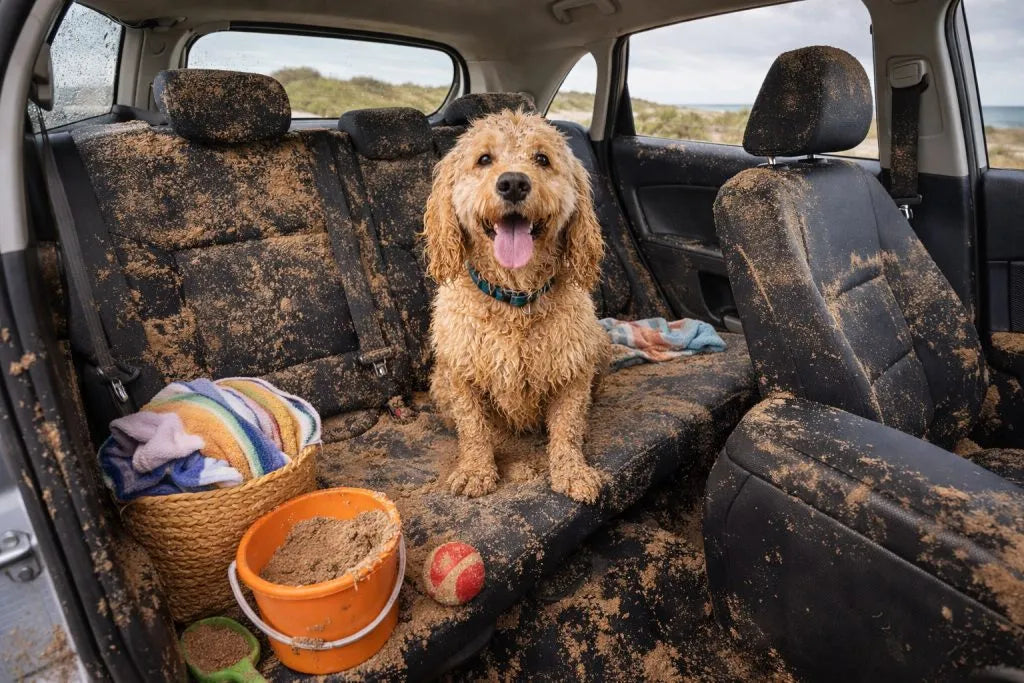
Wet fur, salty coats, and sandy paws can quickly turn your car and house into a mess.
Learning how to wash a dog after the beach is one of the best ways to keep your car clean, protect your dog’s skin, and make beach trips easier.
In this guide we explain the best way to rinse your dog after the beach and why many dog owners now keep a portable rinse system in the car.
Why You Should Rinse Your Dog After the Beach
Salt water and sand can cause several problems if left on your dog’s coat.
These include:
• dry or itchy skin
• salt residue in fur
• sand trapped in paws
• irritation between paw pads
Even dogs that love swimming benefit from a quick rinse with fresh water after a beach trip.
A simple rinse removes salt, sand, and dirt before it causes irritation.

The Problem With Sandy Dogs in Cars
Most dog owners recognise this scenario.
Your dog jumps into the car after a beach run and suddenly everything is covered in:
• sand
• salt water
• wet fur
Once sand gets into carpets and seat fabric it can be surprisingly difficult to remove.
If this happens regularly, you might find our guide useful:
Rinsing your dog before they get into the car can prevent most of this mess.

The Best Way to Wash a Dog After the Beach
You do not need a full dog wash or shampoo after every beach trip.
In most cases a simple fresh water rinse is enough.
Follow these steps.
1. Rinse Paws First
Start by rinsing your dog’s paws and legs.
Sand often collects around:
• paw pads
• ankles
• lower legs
A gentle spray helps remove trapped sand before it dries.
2. Rinse the Belly and Chest
Dogs that run through shallow water often collect salt and sand on their belly fur.
Give these areas a quick rinse to remove residue.
3. Rinse the Coat
If your dog has been swimming in the sea, rinse their coat to remove salt water.
Salt left on fur can dry the coat and irritate skin.
You do not need shampoo unless your dog is extremely dirty.

4. Dry Before the Car
After rinsing your dog, give them a quick towel dry.
This removes:
• excess water
• remaining sand
• loose fur
Many outdoor dog owners keep a dog towel and portable rinse system in the boot of the car for exactly this reason.

Why Portable Dog Showers Are Useful at the Beach
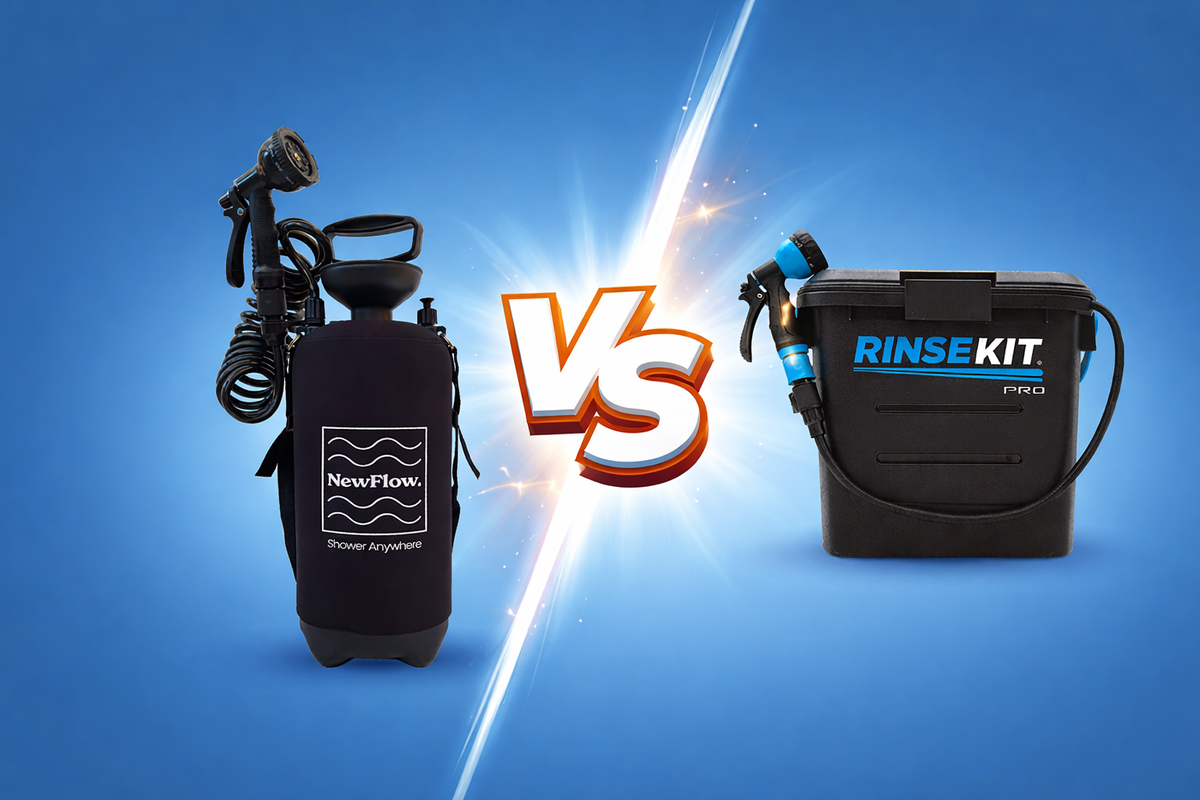
One of the easiest ways to rinse a dog after the beach is using a portable shower.
Portable rinse systems allow you to wash sand and salt from your dog anywhere without needing a tap or hose.
They are particularly useful after:
• beach walks
• coastal hikes
• paddleboarding trips
• surfing sessions
You can see how they work here:
The same rinse approach works for both mud and sand.
Beach Adventures With Dogs
Taking dogs to the beach is one of the best parts of outdoor life.
But learning a simple rinse routine makes those trips far easier.
A quick rinse can:
• protect your dog’s skin
• remove salt water
• stop sand spreading through your car
And it only takes a minute or two.
Final Thoughts
If you regularly visit the beach with your dog, rinsing them before getting into the car is one of the easiest ways to keep things clean.
A quick rinse removes sand, salt, and dirt before it becomes a bigger problem later.
For many dog owners, a portable rinse system kept in the car has become the simplest solution.
It makes beach trips easier, cleaner, and far more enjoyable.