What Size Dry Bag Do You Actually Need?
What Size Dry Bag Do You Actually Need? A Litre by Litre Guide
Dry bags are sized in litres, which is a wonderfully precise way of describing something nobody can picture. Is 10 litres a lot? Will 20 litres take a towel? Why does the 40 litre one look enormous until you try to fit a wetsuit in it? Here's the honest guide to what each size actually holds, and how to pick right first time.
The golden rule: size up, then roll down
A roll top dry bag only seals properly with at least three full folds at the top, which means you can never use all the litres on the label. Pack a dry bag to the brim and you've got a wet bag with a fancy closure. As a rule of thumb, buy about a third more capacity than your kit needs. An underfilled dry bag rolls down small anyway, so spare litres cost you nothing, but missing litres cost you dry socks.

1 to 3 litres: the pocket protectors
Phone, keys, cards, a snack. These little bags live inside bigger bags or clip to a board or kayak deck. Perfect for the things that must never get wet, and a sensible extra layer for a phone even inside a bigger dry bag (more on that in our guide to what waterproof ratings really mean).

5 to 10 litres: the day essentials
A spare base layer, a light towel, lunch, sun cream, a warm hat. This is the classic paddler's deck bag size, small enough to strap down without catching the wind, big enough that you're not choosing between the fleece and the flapjack.

15 to 20 litres: the full change of clothes
This is the size where a complete dry outfit fits: trousers, top, underwear, socks and a packable jacket, with room for a small towel. If your plan involves getting properly wet on purpose, whether that's wild swimming, a surf or an accidental capsize, 15 to 20 litres is the minimum that gets you comfortably home.

30 to 40 litres: the everything bag
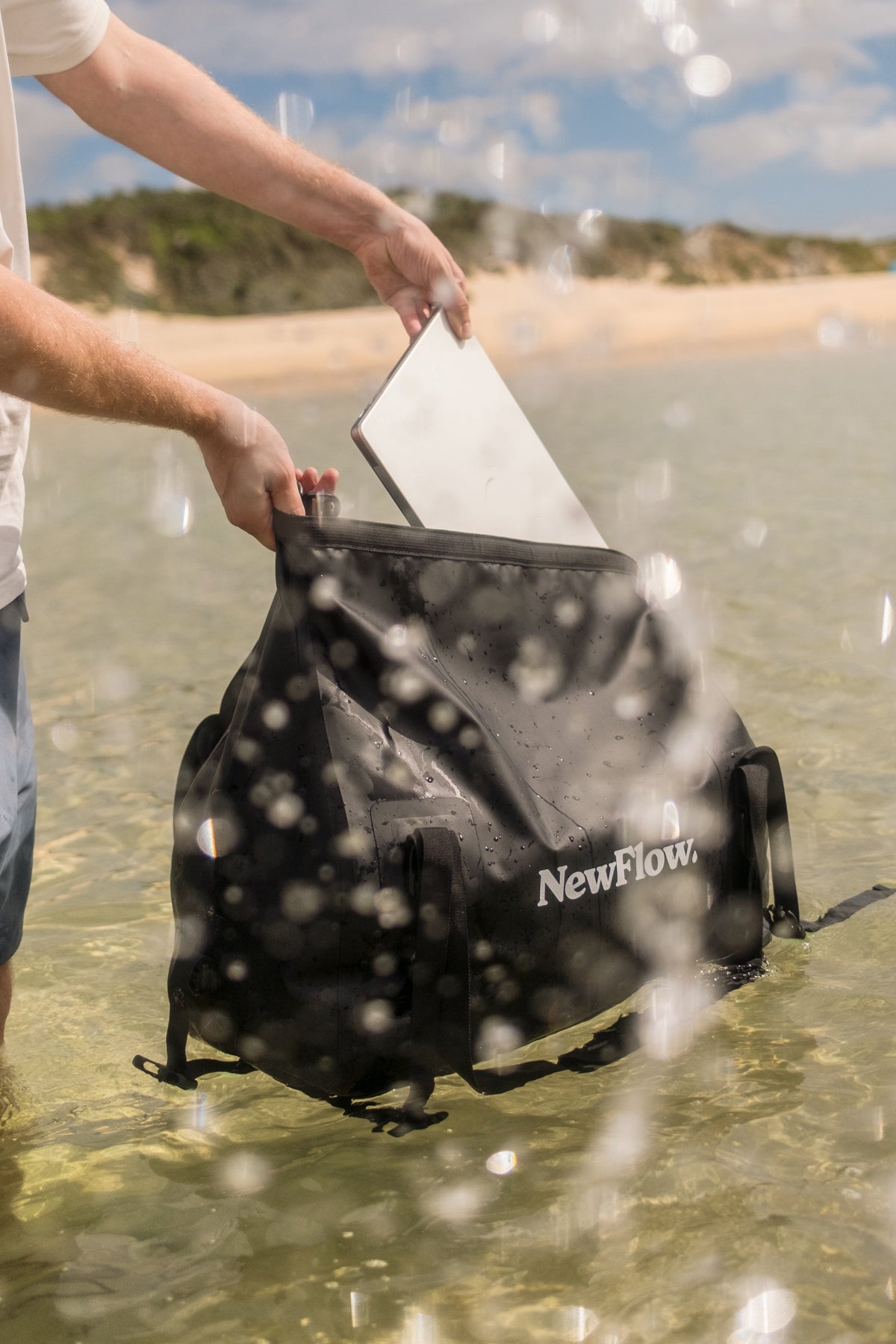
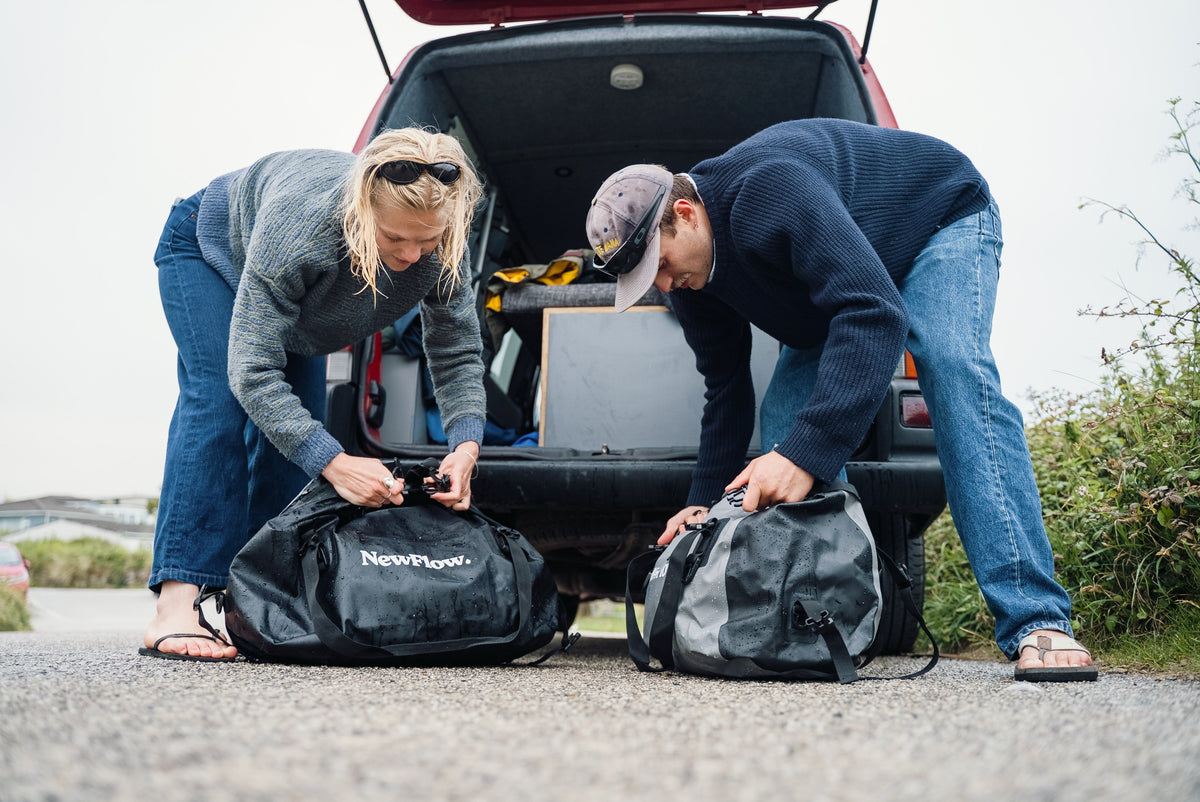
Now we're talking about the family beach day, the post surf change, the boat weekend. Forty litres swallows a wetsuit, a big towel, a changing robe, a full change of clothes and the miscellaneous kit that always comes too. It's the size we built the Waterproof Beach Dry Bag & Changing Mat around, because 40 litres is the point where one bag genuinely carries everything for a wet day out, and it doubles as a mat to stand on when you change (a detail your cold feet will thank you for [1]).

The clever trick with a big bag is that it works in both directions: dry kit out on the way there, soaked kit contained on the way back. That reverse job is a whole subject of its own, covered in what to do with wet kit after a swim.
60 litres and up: expedition territory
Multi day paddling trips, sailing passages, kit storage on deck. Brilliant if you need it, overkill if you don't, and heavy to lug when full. Most people are better served by one 40 and one 10 than a single 60.
Quick picks by activity
A pocket bag plus a 15 to 20 for swimmers, who need a fast, complete change close to hand; the RNLI's advice after cold water is to dry and dress quickly in warm layers, so your change of clothes wants to be one bag, not a scavenger hunt [2]. A 5 to 10 on deck plus a 30 to 40 in the car for paddleboarders. The 40 as the family workhorse for beach days. And for boats, one big bag for the wet locker and small ones for electronics.
Whatever size you land on, learn the three fold seal, keep sand out of the roll, and it'll outlast most of the kit inside it.

References
- Outdoor Swimming Society, The Subtle Art of Warming Up (stand on something as you get changed): https://www.outdoorswimmingsociety.com/warming-up-after-drop/
- RNLI, Top Tips for Open Water Swimming Beginners: https://rnli.org/water-safety/choose-your-activity/open-water-swimming/top-tips-open-water-swimming-for-beginners