Best Portable Dog Shower and Wash UK (Updated for 2027)
If you walk a dog in Britain, you own a wet dog for about eight months of the year. Mud in autumn, salt and sand in summer, that unidentifiable pond smell all year round. A portable dog shower turns the drive home from a misery into a non event. We've been making one for a couple of years now and have talked to hundreds of dog owners about what works, so here's an honest look at every type of portable dog wash you can buy in 2027, where each one shines and where it falls down.
The short version
For most dog owners a hand pumped pressure shower is the best buy. It cleans properly, needs no batteries, holds warm water and fits in the boot. Gravity bags are cheap but weak. Battery pumps are powerful but another thing to charge. Bottles and buckets are better than nothing and that's about it.
1. Hand pumped pressure showers
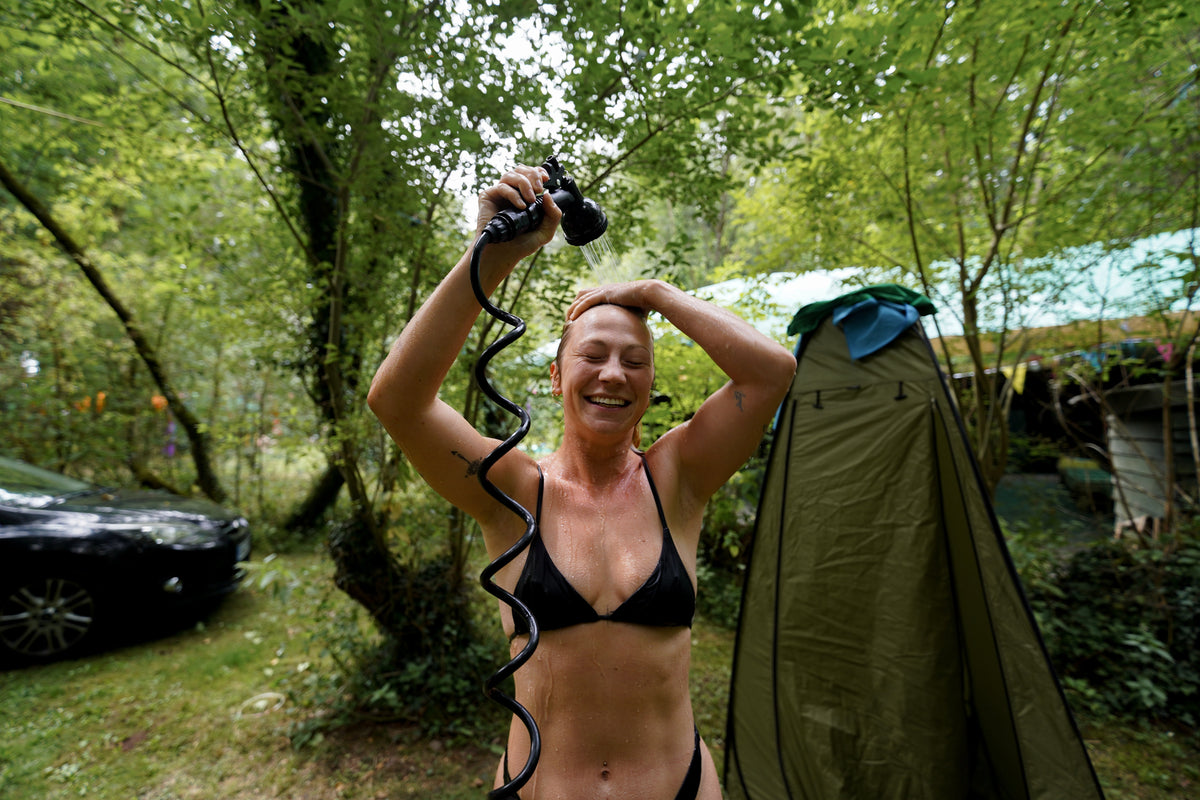
How they work: you fill the tank, pump the handle 10 to 15 times, and the air pressure pushes water out through a hose and shower head. No electricity, no hanging it from anything [1]. If you're new to them, our how to use guide shows the fill and pump in thirty seconds.
Why they're the top pick: pressure is what gets mud out of a coat, and a pumped tank gives you a proper spray for several minutes. A good one has an insulated tank so you can fill it with warm water at home and it's still warm at the end of the walk, which makes a huge difference to a wriggly dog in January. Multiple head modes let you go gentle on the face and firm on the legs. An 8 litre tank washes one dog of any size per fill, and a 12 litre (ours lands next summer) handles two or a big dog after a beach day.
Where they fall down: you have to remember to pump it, and a full tank weighs eight kilos, so it lives in the boot rather than on your back.
Best for: muddy walks, beach days, camping with a dog, anyone with a spaniel.
Our pick: the NewFlow 8 Litre Portable Shower, which is the one we make, so take that with the obvious pinch of salt. It has a 5mm neoprene sleeve for warm water, a 10 mode head, a 3m coiled hose and a strap that clips to a tow bar, gate or tree [1]. A brush attachment for working water through thick coats is coming in spring 2027 and fits existing showers. If you want it with the holder so it hangs off the boot, The Setup bundle is the pair together, and the dog owners page has the full rundown for dog use.

2. Gravity and solar shower bags
How they work: a bag of water you hang from something high, with a hose and a tap. The sun warms the water if you leave it out.
Why people buy them: they're cheap and they pack flat.
Where they fall down: there's no pressure, just a trickle, so they wet the dog without really cleaning it. You need something to hang them from, which at a car park is usually nothing. And the solar warming only works in summer, which is the one time you don't need it.
Best for: a quick rinse at a campsite when the weather's good. We've gone into the solar vs pressure question separately.

3. Battery and 12V pump showers
How they work: a rechargeable pump sits in a bucket or bottle and pushes water through a hose. 12V versions plug into the car.
Why people buy them: genuinely strong pressure and no pumping.
Where they fall down: you need a container of water as well as the pump, they're another thing to charge, the pump and battery don't like being dropped in muddy car parks, and they're usually the most expensive option. The 12V ones tie you to the car.
Best for: people who wash big, thick coated dogs daily and don't mind the faff.
4. Squeeze bottles and spray caps
How they work: a bottle with a spray head, or a standard water bottle with a holey cap.
Why people buy them: they cost almost nothing and fit in a pocket.
Where they fall down: a litre or two of water with no pressure cleans paws and not much else. Fine for a quick rinse of muddy feet, hopeless on a full coat.
Best for: paw rinses, small dogs, keeping one in the glovebox as a backup.
5. Bucket and sponge
The classic. A collapsible bucket, a sponge and some patience. It works, it's slow, it uses a lot of water for what it achieves, and most dogs will have shaken the bucket's contents over you before you're done. We've compared this against a hose and a portable shower in a separate post if you want the long version.

What actually matters when choosing
Pressure first. If it doesn't spray with some force, it won't shift mud. Then warm water, because a cold rinse in winter makes dogs miserable and the job take twice as long; the Blue Cross recommends lukewarm water for washing dogs [2], and we've written about whether you need a warm water dog shower. Then capacity: 8 litres per dog is the right ballpark. Then the practical stuff, a hose long enough to reach the dog on the ground, a strap so your hands are free, and a shower head with a gentle mode for faces.
We've written a full portable dog washer buying guide if you want to go deeper on each of those.
The routine that makes any of them work better
Fill with warm water before you leave. Keep a mat or old towel in the boot and stand the dog on it (here's what other dog owners keep in the boot). Wet the body first on a soft mode, then jet on the legs and paws, then mist round the face. Towel, treat, home. Three minutes, no bath, no smell in the car. For the specific cases, see washing a dog after the beach and cleaning a muddy dog before the car.

References
- NewFlow 8 Litre Portable Shower product page and how to use guide: https://new-flow.co.uk/products/8-litre-portable-shower and https://new-flow.co.uk/pages/how-to-use
- Blue Cross, how to bath your dog: https://www.bluecross.org.uk/advice/dog/how-to-bath-your-dog
- This post: https://new-flow.co.uk/blogs/news/best-portable-dog-shower-and-wash-2026