Best Dry Bag Setup for Paddleboarding and Kayaking
Best Dry Bag Setup for Paddleboarding and Kayaking
Every paddler eventually develops a system, usually after donating a phone to the lakebed or discovering that a "waterproof" jacket pocket is a small aquarium. Here's the setup that experienced SUP and kayak folk converge on: two bags with different jobs, one on the water and one waiting at the car.
On the deck: small, strapped and sealed
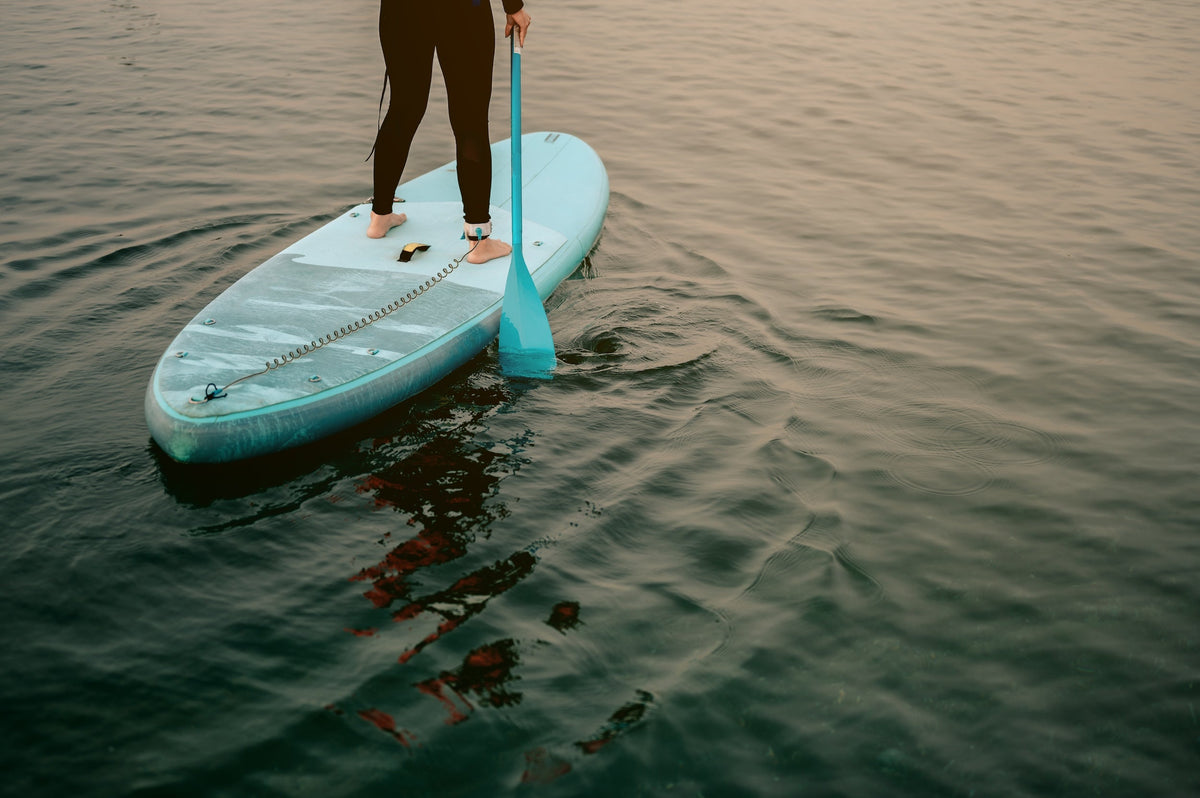
The deck bag is your 5 to 10 litre companion, living under the bungees on a SUP nose or clipped into a kayak's deck lines. Small matters here: a big bag on deck catches wind, shifts your balance and gives waves something to grab.
What earns a place in it: a warm layer, a snack, sun cream, and the precious things. For the phone, run the two barrier rule: a small sealed pouch first, then the dry bag, so opening the bag on the water for a snack never gambles the phone. Ratings on pouches are a useful guide, and worth understanding before you trust one with a swim [1]. Whatever you carry, seal it properly with the full three fold roll, because the deck is exactly where a lazy seal gets tested; our packing and sealing guide covers the technique in two minutes.
Strap it so it can't slide: through a handle or D ring and under the bungees, not just wedged. In a capsize, a well sealed bag floats, and a bag attached to the board floats where you can reach it.

Back at the car: the big bag does the heavy lifting
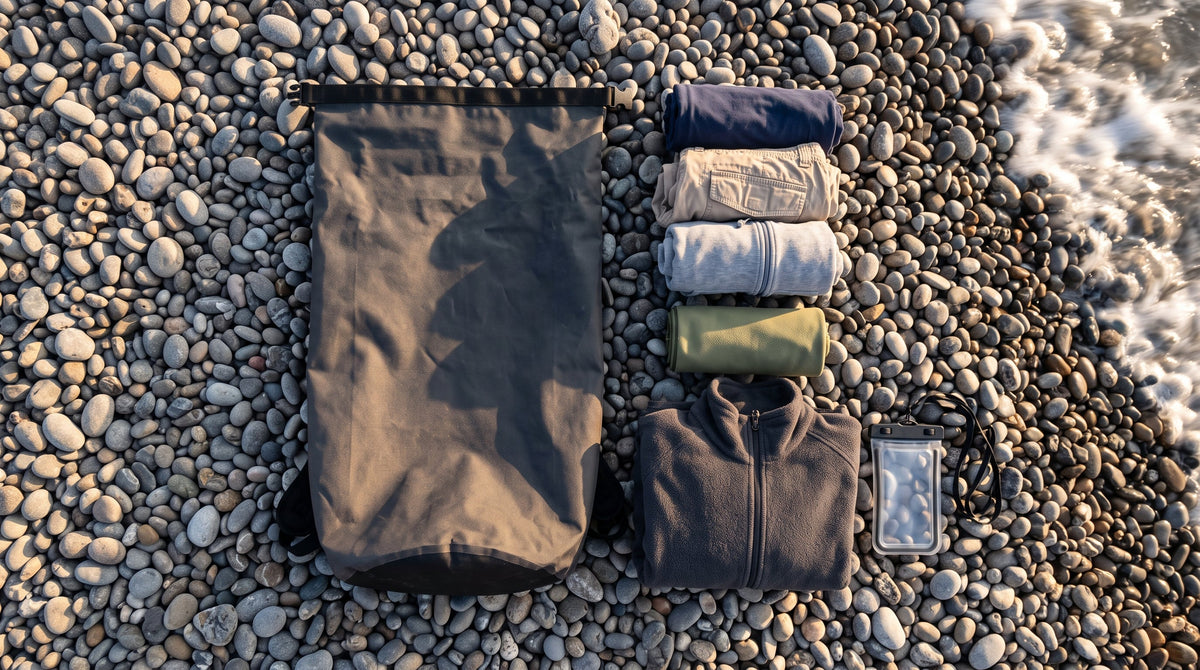
The 30 to 40 litre bag stays with the car and does two jobs. On the way out it carries everything you don't want on the water: the full change of clothes, big towel, dry shoes, flask. On the way back it swallows the soaked aftermath. That reversibility is the quiet genius of waterproof fabric, and it's why we built the Waterproof Beach Dry Bag & Changing Mat to unclip flat as a changing mat too: warm feet while you change, then the wet kit folds away inside. If you're between sizes for either bag, the litre by litre guide settles it.
The post paddle routine that protects your kit (and the water)
Three habits worth stacking at the car:
Rinse the board and yourself. Salt and grit shorten a board's life, and a freshwater rinse is the whole maintenance secret; the full method is in our SUP cleaning guide. A portable pressure shower filled at home does board, kit and paddler from one tank.
Check, clean, dry your kit between waters. Rinsing gear before moving between rivers, lakes and coasts isn't just good kit care, it helps stop invasive species hitching a ride, something UK paddlers are increasingly asked to take seriously; we've written about why it matters and how to do it.
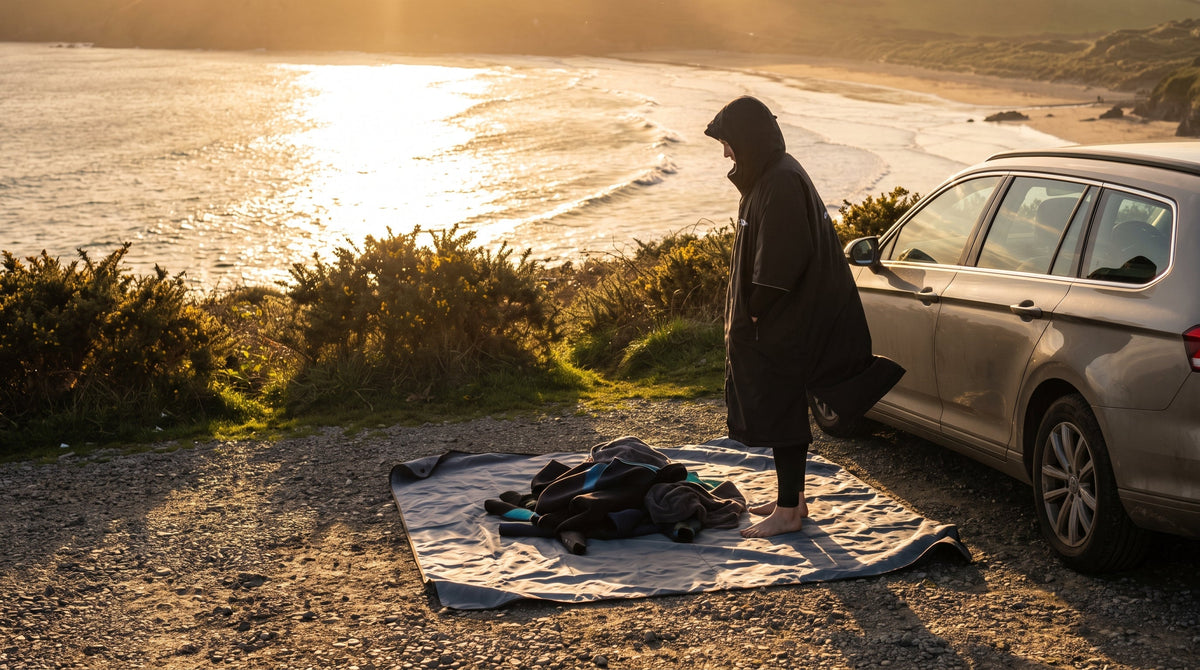
Change warm, pack wet. Mat down, robe on, layers on before the chill sets in [2], then the wet kit into the bag; the full two minute routine keeps both you and the car dry.

The quick version
Small bag on deck with the precious things double sealed. Big bag at the car with the dry change and the mat. Rinse everything, change fast, pack the wet away. Two bags, three habits, and the only thing that comes home damp is your hair.

References
- Trusted Reviews, What Is IPX7? The Water Resistance Rating Explained: https://www.trustedreviews.com/explainer/what-is-ipx7-4253505
- Outdoor Swimming Society, The Subtle Art of Warming Up: https://www.outdoorswimmingsociety.com/warming-up-after-drop/